In this guide
✦ Seaweed at a Glance
Seaweed on the Kenya Coast: The Honest Guide
Seaweed on the Kenya coast is real, it is seasonal, and it is nowhere near as bad as the internet makes it look.
The short version: seaweed arrives with the Kusi, the southeast monsoon that blows roughly from June to October, and usually peaks in August and September. From December to March, the water is generally close to spotless.
Even in the worst weeks, conditions vary enormously from beach to beach, so where you stay matters just as much as when you come. Garoda Beach in Watamu tends to stay among the cleanest during peak seaweed season.
It is also impossible to predict perfectly. The ocean is constantly moving the seaweed along the coast, so a beach can be completely clean one day, have seaweed wash up after high tide the next, and be clear again a couple of days later.
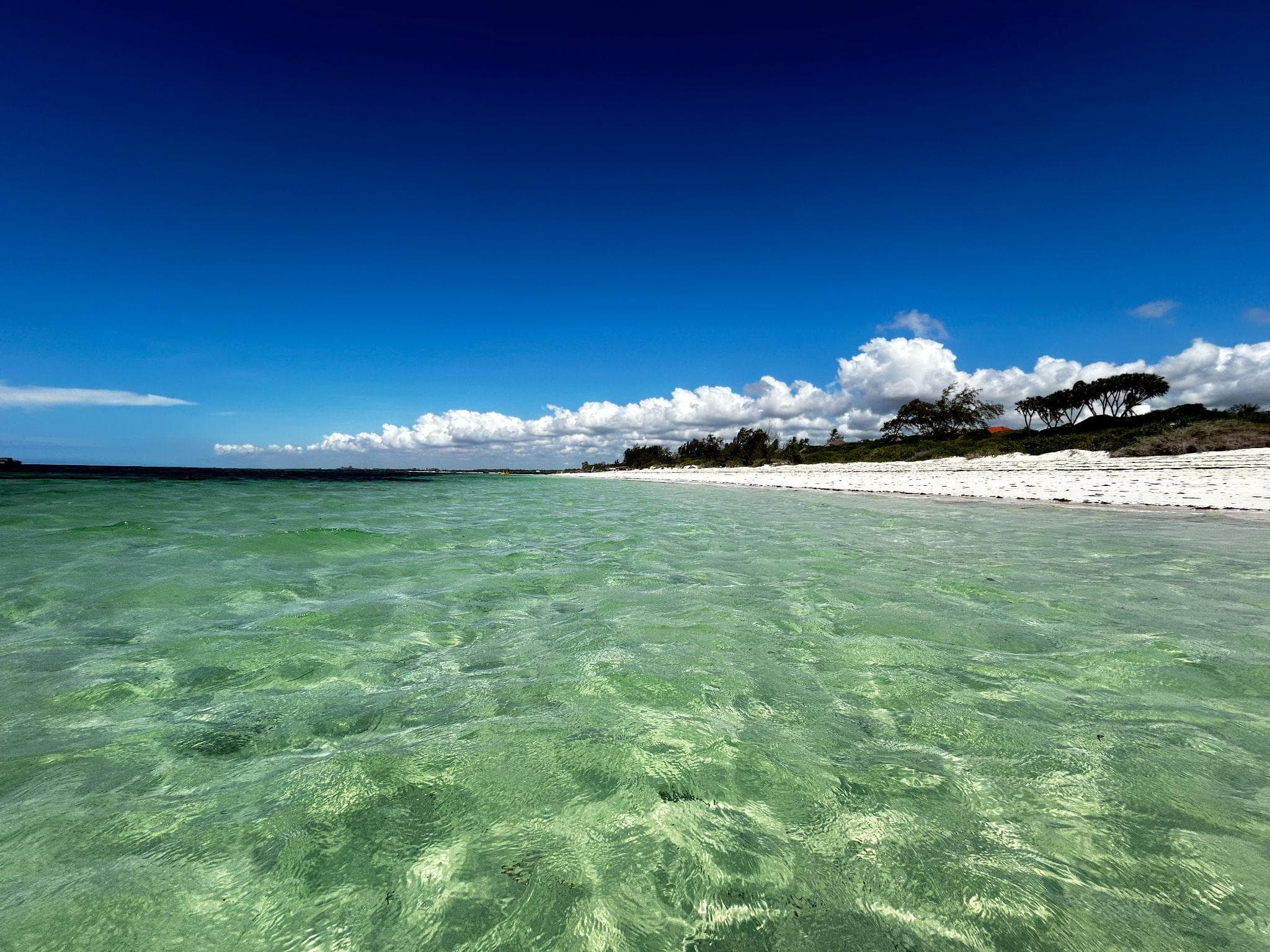
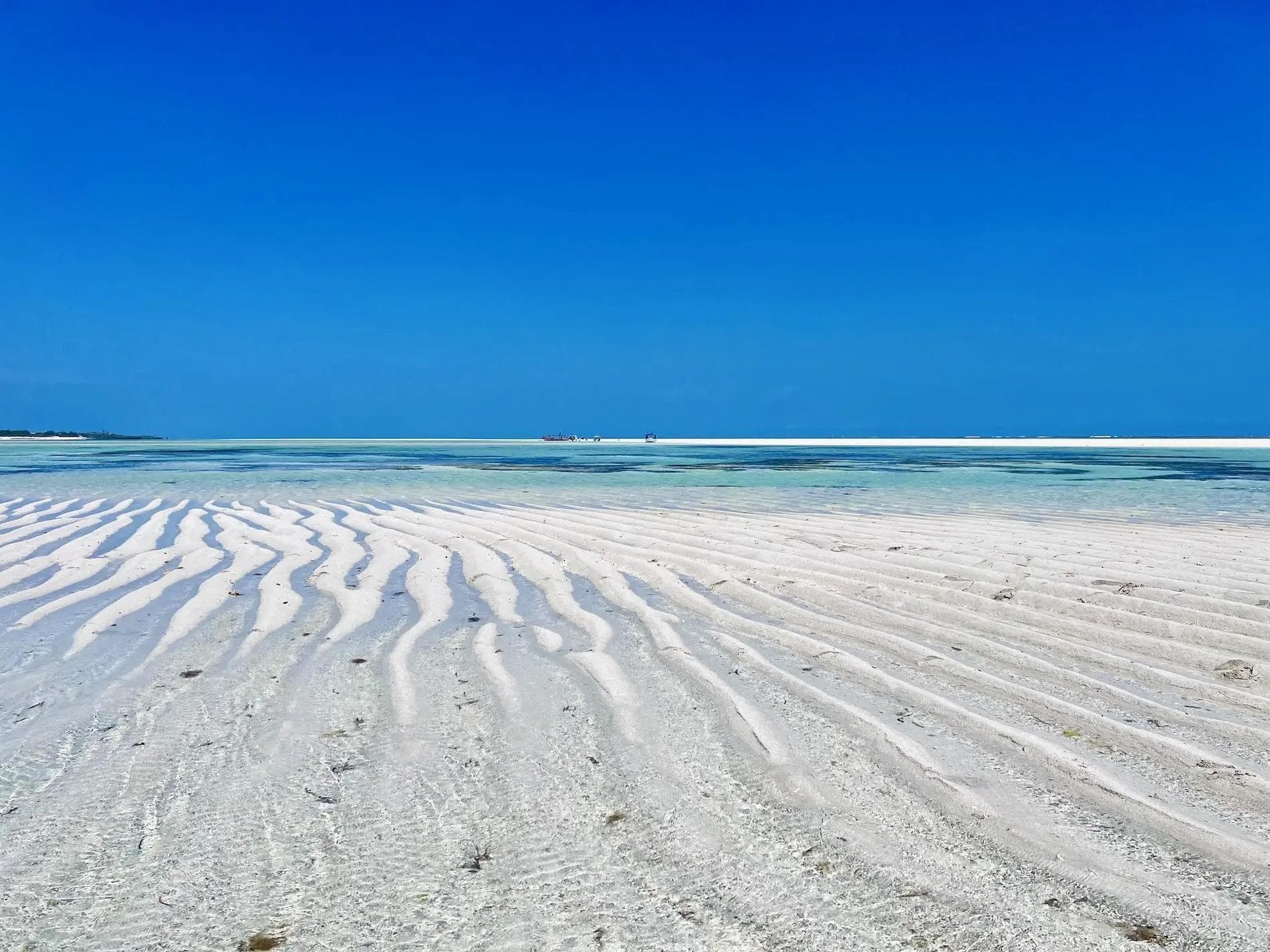
Most importantly, seaweed season does not mean your beach holiday is ruined. Even beaches with seaweed can still be incredibly beautiful. It usually collects along the shoreline, while the sea farther out remains clear, and at low tide the sandbanks are often unaffected. You can still swim, enjoy turquoise water, spend the day on the beach and have an amazing holiday on the Kenya coast.
Many hotels also rake their beaches early in the morning, so in some places you may barely notice it at all.
That is the answer most people came for.
The rest of this guide explains what the seaweed actually is, why one beach can be clean while the next has more, what it looks like in reality, and how to plan a trip to Watamu and the Kenya coast during August and September.
Left: seaweed banked up along the high water line in Watamu. Right: the same coastline in the clear months. Both are completely normal. Which one you get is mostly a question of timing and of which beach you booked.
Is it sargassum? No, and the difference matters
If you have googled beach seaweed recently you have seen photos of Cancun, Tulum and Barbados buried under a metre of rotting brown weed. That is Atlantic sargassum. It is a genuine ecological crisis, it is driven by a vast floating bloom that stretches across the tropical Atlantic, and it has essentially nothing to do with Kenya.
What washes up on the Kenya coast is mostly local. The lagoons inside the reef here are carpeted with seagrass meadows, dominated by a species called Thalassodendron ciliatum, along with native brown and red algae growing on the reef itself. When the monsoon swell picks up, it tears that growth loose and pushes it shoreward. The weed on your beach in August grew about four hundred metres away.
Do not trust the Caribbean photos
Searching "sargassum" will show you images from Mexico and the Caribbean that look apocalyptic. Kenya does not get that. Ours arrives in a band along the tide line, not in drifts you have to wade through, and it comes and goes with the tide rather than sitting and rotting for weeks.
That distinction is not pedantry, it changes what you should expect:
- It arrives in a line along the high water mark, not as a floating raft offshore that blocks swimming.
- It moves. A beach that is weedy on the morning tide can be clean by the afternoon one.
- It is patchy over very short distances, because it depends on the angle of the reef and the shape of each cove.
- It is not toxic and it does not sting. Walking through it is unpleasant underfoot, nothing worse.
- It smells only once it has been sitting in the sun for a day or two, which is why beaches get raked at dawn.
When is seaweed season in Kenya?
The whole coast runs on two monsoons, and once you understand them you can predict the beach conditions for any month of the year.
The Kaskazi blows from the northeast between roughly November and March. It is the gentle one: light wind, flat sea, hot sun and the clearest water of the year. The Kusi blows from the southeast between roughly June and October. It is stronger, cooler and pushes real swell onto the reef. That swell is what strips the lagoon and delivers the weed.
| Sea and wind | Seaweed | Verdict | |
|---|---|---|---|
| December to March | Kaskazi. Calm, flat, hot | Minimal to none | The best window. Book months ahead |
| April to May | Long rains. Transitional | Light and patchy | Quiet and cheap. Water can cloud up |
| June to July | Kusi building. Breezy | Starts arriving | Still good, especially in the coves |
| August to September | Kusi at full strength | The worst of it | Fine if you pick the right beach |
| October to November | Kusi fading, Kaskazi returns | Clearing week by week | Underrated. Improves fast |
Worth saying plainly: these are patterns, not guarantees. Seaweed shifts year to year with wind strength, water temperature and currents, and locals will tell you some Augusts are barely noticeable while others are heavy. Our guide to the best time to visit covers the rest of the seasonal picture, including rain, heat and crowds.
Which Kenya beaches stay cleanest in seaweed season?
This is the part that actually decides your holiday, and it is the part every other article skips. Two beaches ten minutes apart can be completely different on the same morning. It comes down to three things: how deep the cove is, what angle the offshore reef sits at, and whether the beach faces into the Kusi or away from it.
| In the Kusi | Why | Best for | |
|---|---|---|---|
| Garoda, Watamu | Usually stays clean | Deep cove, reef angle protects it | The safest bet in August |
| Short Beach, Watamu | Usually light | Small sheltered cove | A quiet swim away from crowds |
| Bofa, Kilifi | Light | Long beach, reef well offshore | Empty sand and kite wind |
| Turtle Bay, Watamu | Gets hit | Open and exposed | Walk south toward Garoda |
| Watamu Bay | Gets hit | Shallow bay collects and holds it | Boats and sunset, not swimming |
| Diani central | Gets hit | Long exposed beach facing the Kusi | Hotels here rake daily |
| Galu, Diani | Cleaner than central | Reef curves away differently | The south coast pick in Kusi |
Klickenya local tip
If your stretch is weedy, walk. Fifteen to twenty minutes in either direction very often puts you on clean sand, because the weed collects in some coves and skips others entirely. Ask the beach staff at your hotel which way to go. They walk it every morning and they always know.
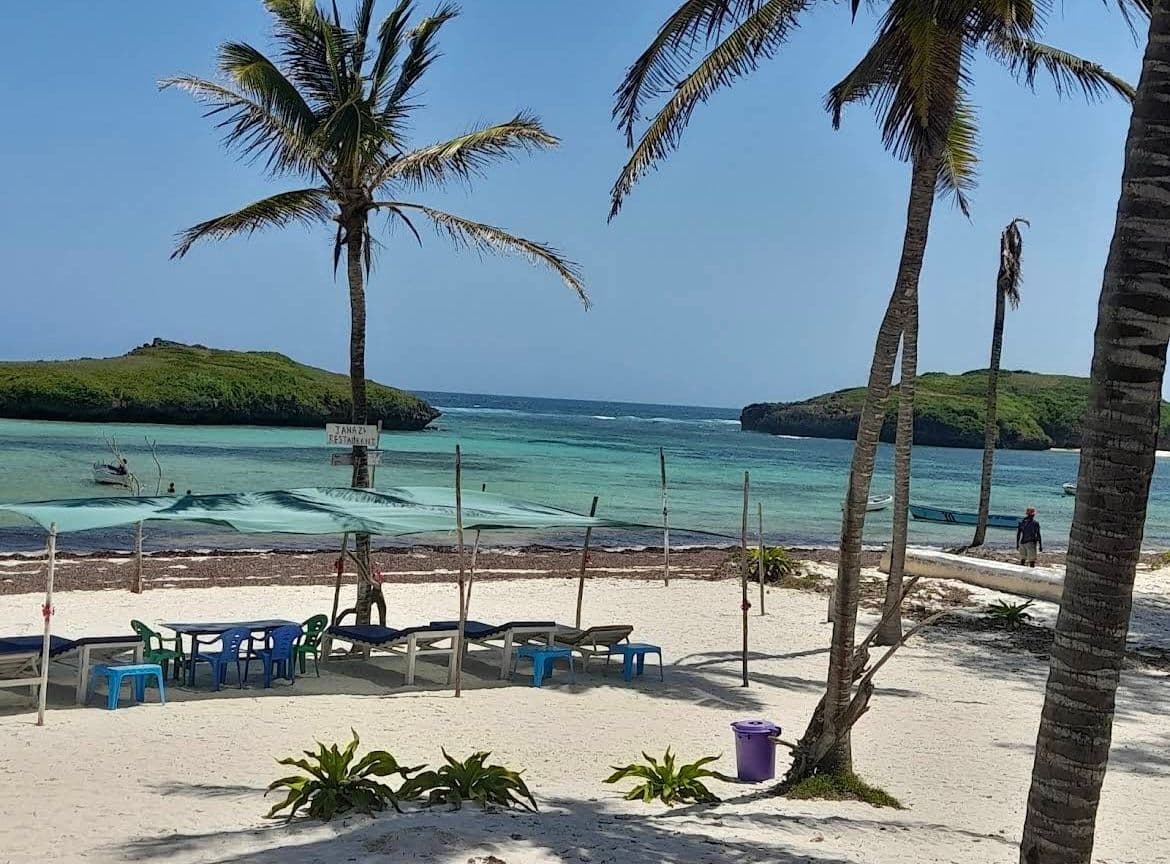
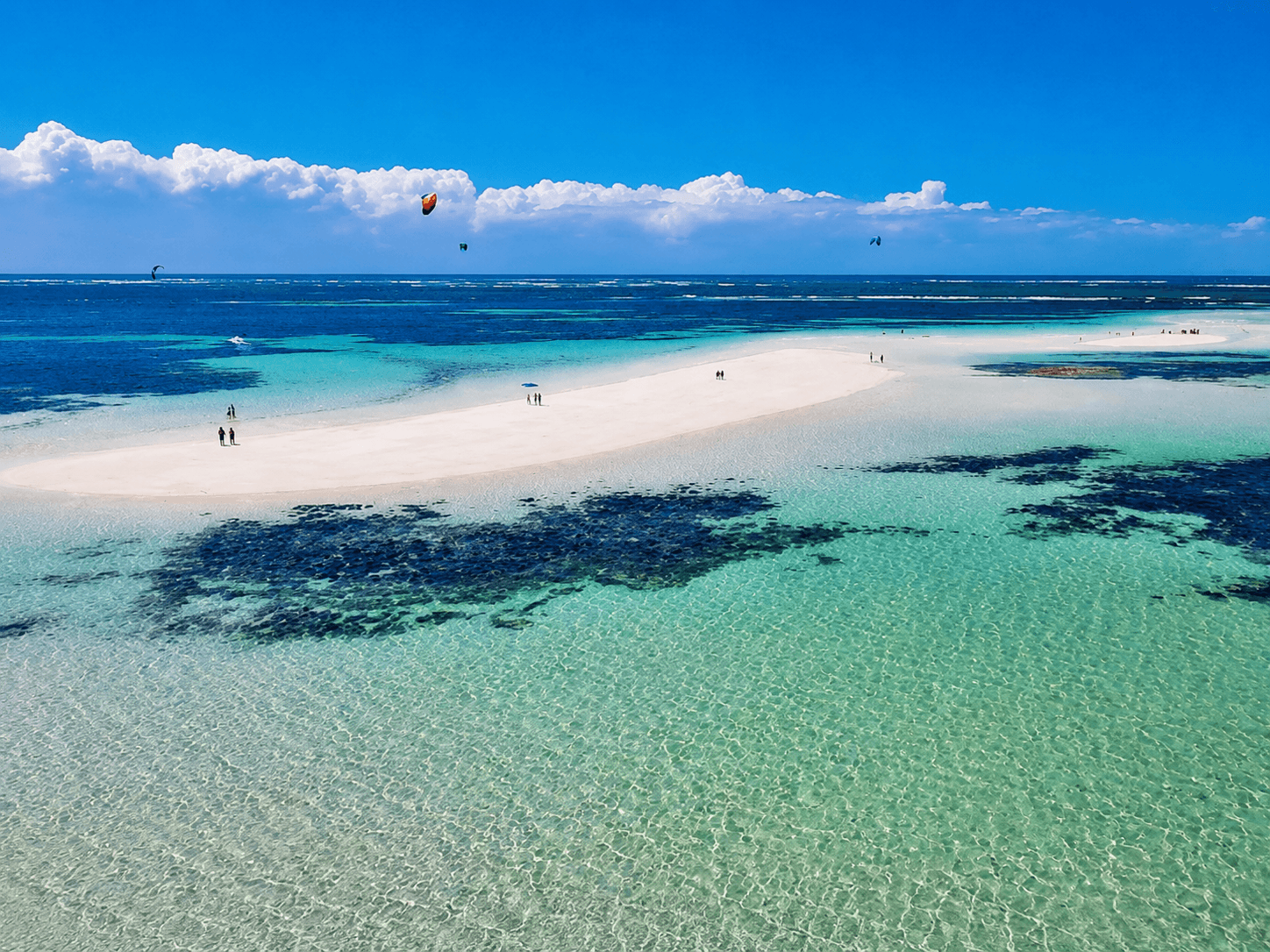
Garoda is the one worth planning around. It is the beach locals send people to when the seaweed reports start, and it holds up when Turtle Bay and the town beach are covered. If you are travelling in August or September and you only care about one thing, book near Garoda.
The seaweed season insurance policy
Garoda Beach
Watamu
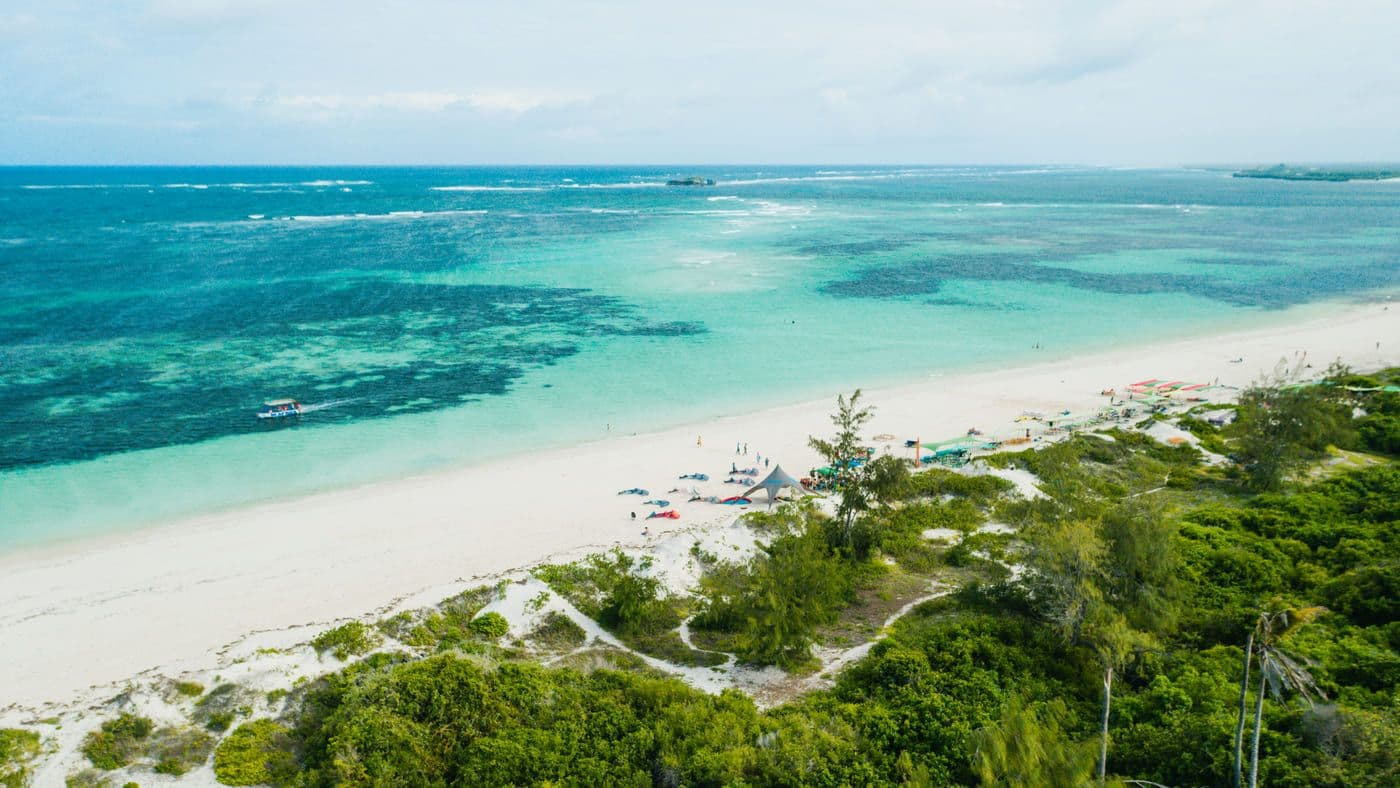
Up the coast in Kilifi, Bofa Beach is long, open and quiet, and it tends to see lighter weed than the north coast average. It is also the emptiest good beach on this stretch of coast, which is its own argument. The full Kilifi guide has the rest.
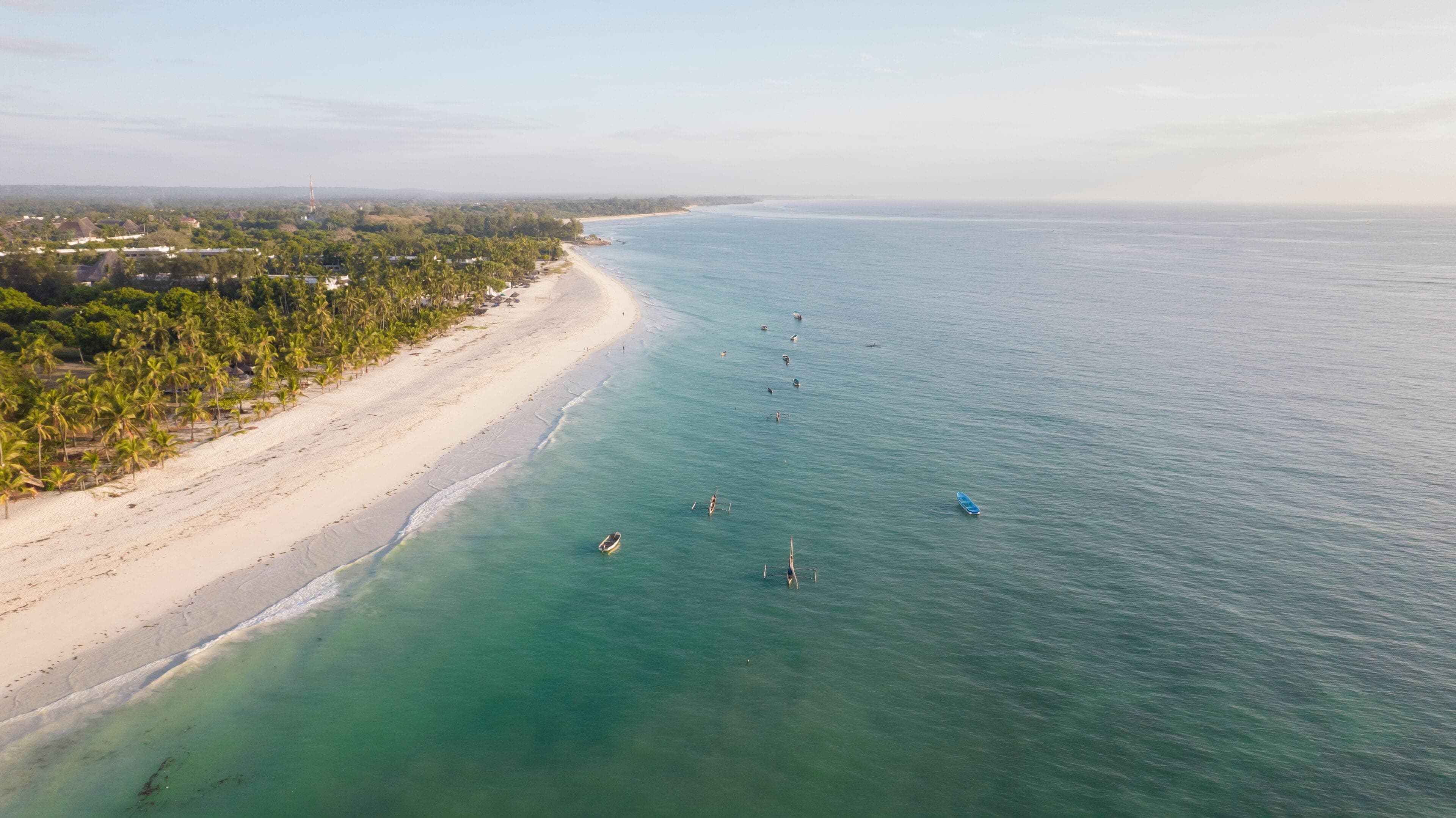
Kilifi in seaweed season
Bofa Beach
Kilifi · beach
What does it actually look like when it lands?
Honestly, it looks like a brown or reddish band lying along the top of the beach where the last high tide reached. Sometimes it is a thin scatter you barely notice. In a bad week it is a continuous bank, ankle deep and a couple of metres wide, running the length of the beach. The water beyond it is usually still clear and swimmable, which surprises people. It is the walk from your towel to the sea that is unpleasant, not the swim- you can just walk past or through the seaweed and swim in gorgeous clear water... the seaweed will not stop you from still having an incredible and stunning beach holiday in Kenya!
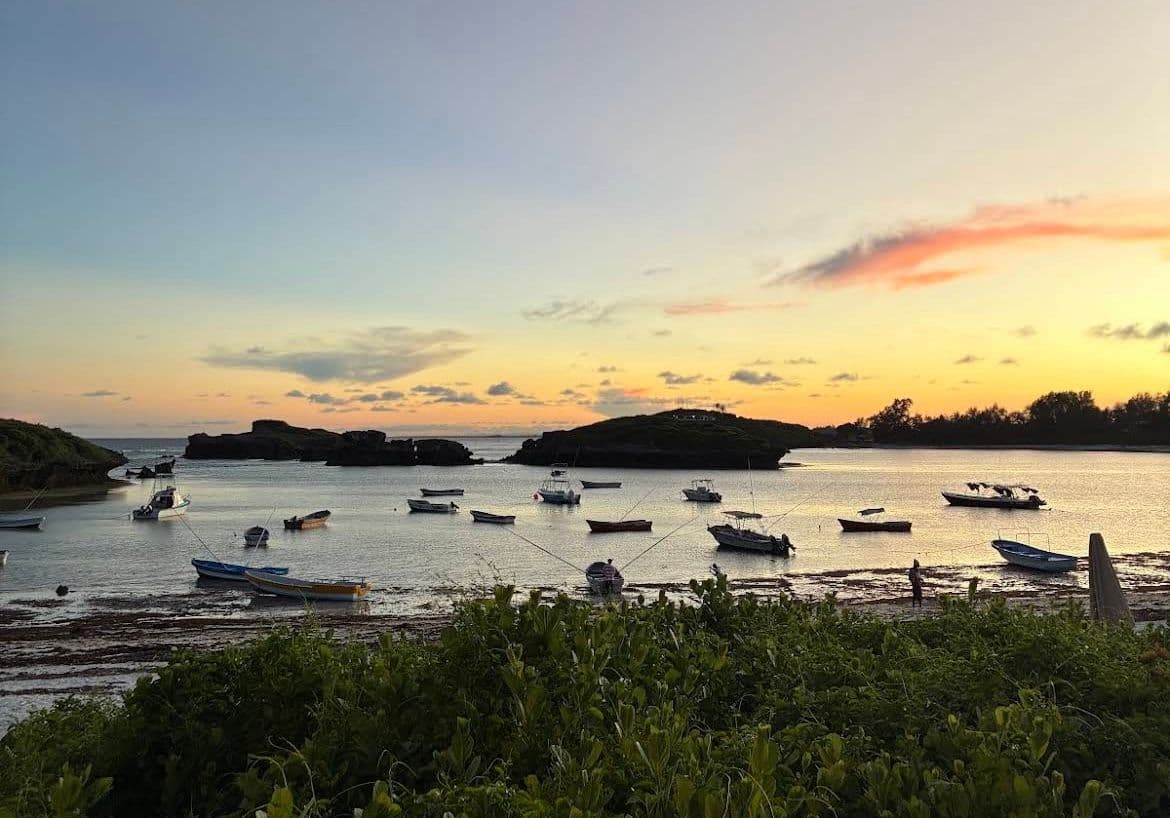
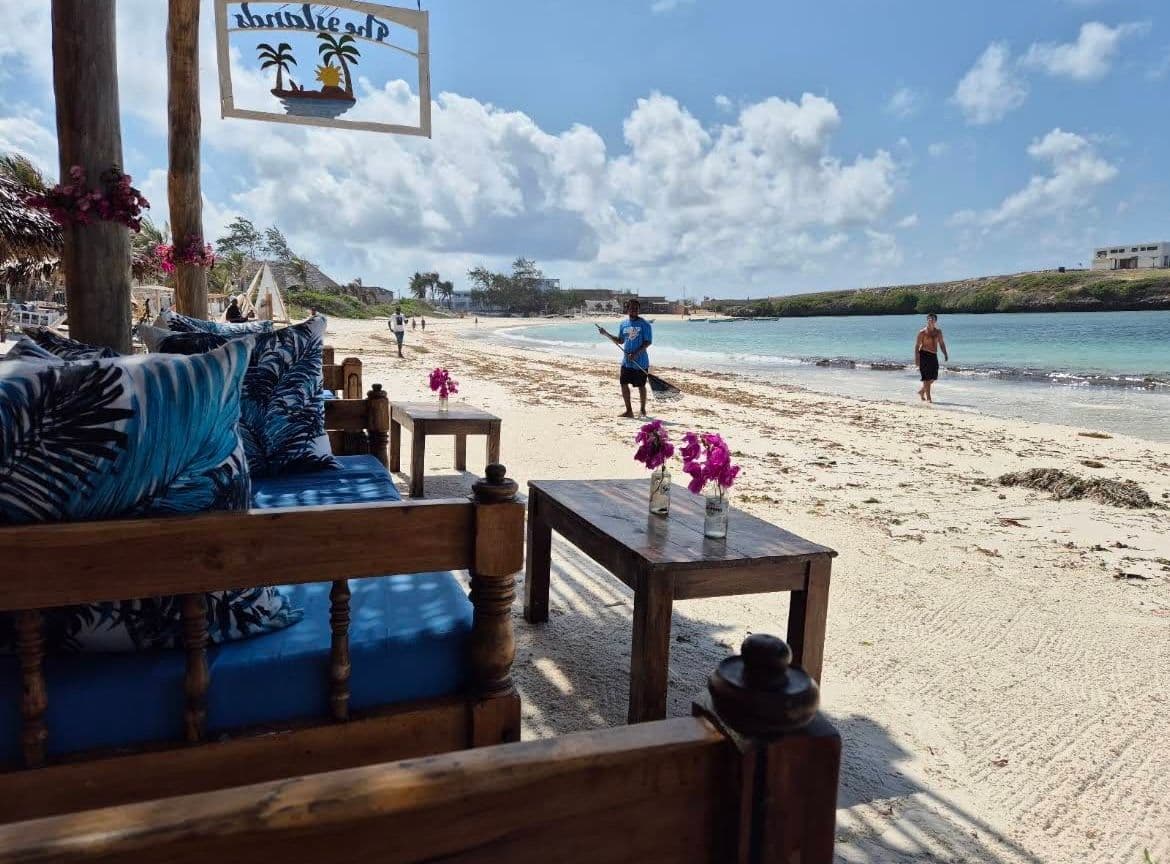
Left: seaweed exposed at low tide in Watamu Bay. Right: the reason most hotel beaches look fine by breakfast. Raking starts at first light and often happens twice a day in the peak weeks.
Almost every hotel and beach bar on the coast rakes. Staff start at dawn, pile the weed above the tide line or cart it off, and by the time guests come down for breakfast the beach in front of the property is clean. This is completely routine and nobody makes a fuss about it.
The smell question
Fresh weed smells of the sea and nothing more. What you occasionally catch is older weed that has been baking above the tide line for a day or two, which turns slightly sulphurous. It is localised and it passes. If your beach smells, you are downwind of an old pile rather than of the ocean itself.
The other honest note: piles that sit for a few days attract sandflies. Not a swarm, not a health issue, but if you are sensitive to bites keep your towel away from an old bank and you will not notice them.
How do you plan a trip around it?
None of them involve cancelling!
- Time your swim to the tide, not the clock. The band sits at the high water mark, so at mid to low tide there is clean wet sand between it and the sea.
- Have a second beach in mind. Fifteen minutes in a tuk-tuk gives you a completely different result on the same day.
- Monitor the beaches and if you try one day and there is seaweed, don't be afraid of trying again on another day because it moves and changes day to day...
- Despite the seaweed, you will still find absolutely stunning water and beaches, especially at low tide when the sandbanks get exposed- these are usually sea weed free! The seaweed is close to the shoreline, when you swim out it is still beauitfully clean
- If it really matters to you, then plan your holiday around January- March
Tide timing is the single most useful skill on this coast and it pays off well beyond seaweed. Our Watamu tide guide explains how to read it and why the beach here transforms twice a day.
The weed is a two week problem that people turn into a two month one. Pick the right beach and August on this coast is still extraordinary!
Travelling in August or September? Start here
BEST BET
Garoda, Watamu
- →Stays the most clean in Watamu
- →Deep cove, protected reef angle
- →Kite schools, sandbank at low tide
STRONG
Bofa, Kilifi
- →Lighter weed than the coast average
- →Empty even in peak season
- →Very few places to eat on the beach
WITH CARE
Diani
- →Central Diani takes the Kusi full on
- →Hotels rake daily, so resort beaches look fine
- →Galu and the southern end stay cleaner
So should you still come in seaweed season?
THE VERDICT
Yes!! It is still stunning!
👍 Reasons to go
- ✓Beaches are less busy than in December
- ✓The Kusi is the best kitesurfing wind of the year! (strongest)
- ✓Water is still warm and still swimmable throughout
- ✓Cove beaches like Garoda barely notice it
- ✓Even the worst beaches don't have seaweed on their shores all the time during this season, it comes and goes
- ✓Many hotels rake so you don't even notice
👎 Think twice if...
- ✗August and September need you to choose the right beach
- ✗Exposed stretches can be weedy for days at a time
- ✗Sea is rougher and visibility for diving drops
- ✗It is cooler and greyer than the Kaskazi months
If your trip is fixed to August and you want the strongest version of it, put Watamu near Garoda at the top of the list, and read the seven best beaches in Watamu for the beach by beach detail. If you are still choosing a destination entirely, our comparison of Watamu, Kilifi, Diani and Lamu is the faster way to decide.
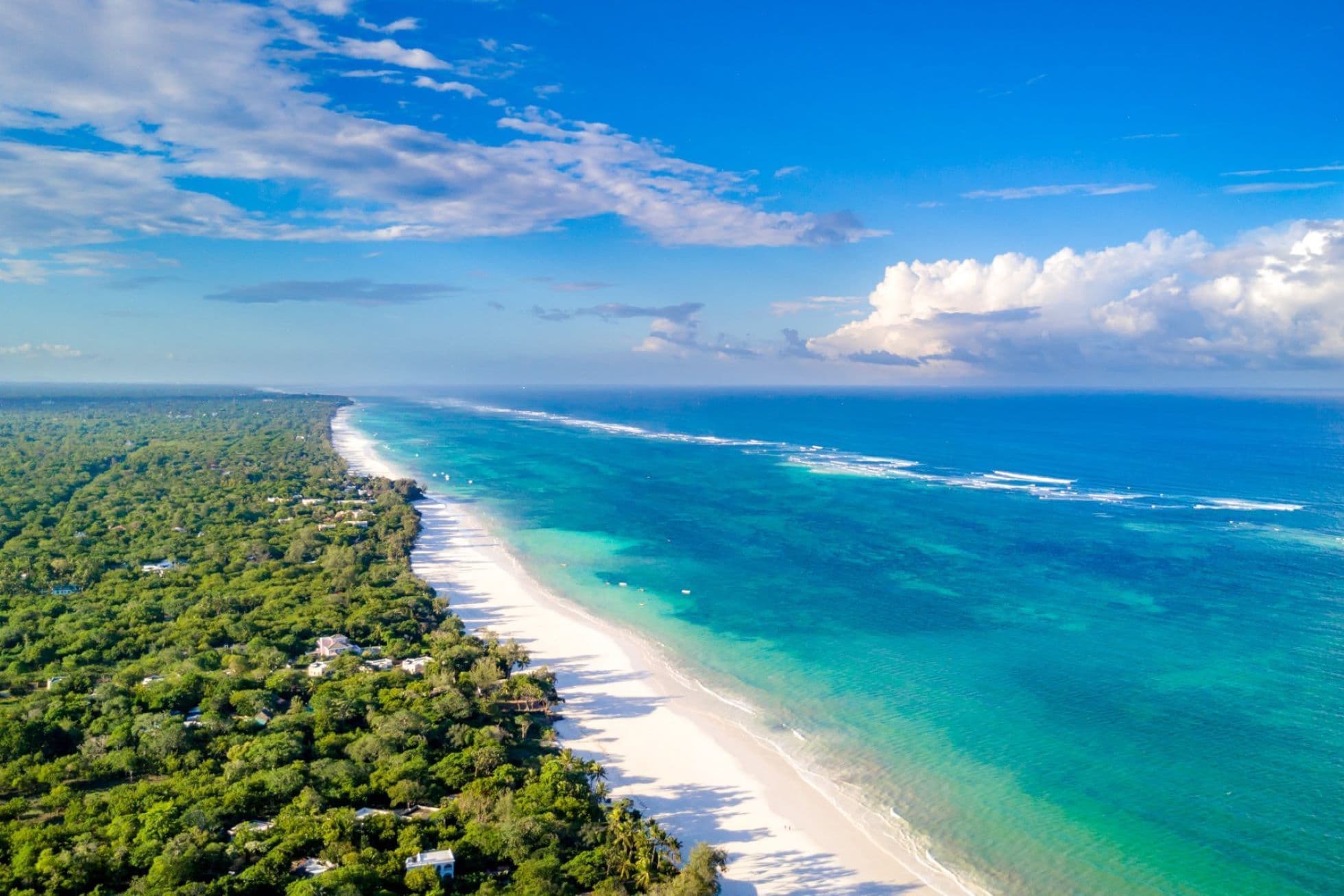
Beaches that hold up in seaweed season
🎯 Seaweed season suits you if...
Kenya seaweed: frequently asked questions
Which month has the most seaweed in Kenya?
August, closely followed by September. These are the two months when the Kusi is at full strength and the swell is stripping the most growth off the lagoon. If you have any flexibility, shifting a trip to late October makes a visible difference.
Is the seaweed in Kenya the same as Caribbean sargassum?
No. The Atlantic sargassum blooms affecting Mexico, the Caribbean and West Africa are a separate phenomenon on a completely different scale. Kenya gets local seagrass and reef algae torn loose by monsoon swell. It arrives in a band at the tide line rather than in drifts, and it clears with the tide.
Is Kenya seaweed dangerous or dirty?
It is neither toxic nor a sign of pollution. It is living marine growth that has been detached by weather. It does not sting and it is safe to walk through, though water shoes make it more pleasant. Old piles left in the sun for several days can smell and attract sandflies, which is why beaches are raked daily.
Do hotels clean the seaweed off the beach?
Almost all of them do, and they start before you are awake. Staff rake the beach in front of the property at first light, and in the peak weeks many rake again in the afternoon. Resort beaches in Diani and Watamu usually look clean by breakfast regardless of the season.
Which Kenya beach has the least seaweed?
Garoda Beach in Watamu, consistently. Its cove shape and the angle of the reef in front of it mean it stays close to clean even in the weeks when the exposed beaches nearby are covered. Short Beach in Watamu and Bofa Beach in Kilifi are the next best on the north coast, and Galu is the pick on the south coast.
Does seaweed stop you swimming in Kenya?
Very rarely. The band sits on the sand at the high water mark, not out in the swimming water, so the sea itself is usually clear. What changes is the walk from your towel to the water. Timing your swim for mid or low tide gives you clean wet sand to cross.
Is there seaweed in Kenya in December and January?
Barely any. December to March is the Kaskazi, the calm northeast monsoon, and it produces the clearest water and cleanest sand of the year. This is also peak season, so accommodation books out months ahead and prices are at their highest.
The bottom line
Seaweed is the most over researched and least understood thing about the Kenya coast. It is seasonal, it is local, it is harmless, and it is wildly variable between beaches that are a short walk apart. The travellers who have a bad time with it are almost always the ones who booked an exposed beach in August without asking anyone first. The ones who have a great time booked a cove, learned the tide, and got low season prices on one of the most beautiful coastlines in the world.
Planning around it? Start with the complete Watamu guide, the Kilifi guide or the Diani guide. If you are coming for wind rather than sand, the Kusi months are covered in our Watamu kitesurfing guide. And when you get hungry, the best restaurants in Watamu do not care what the tide is doing.

KlicKenya